


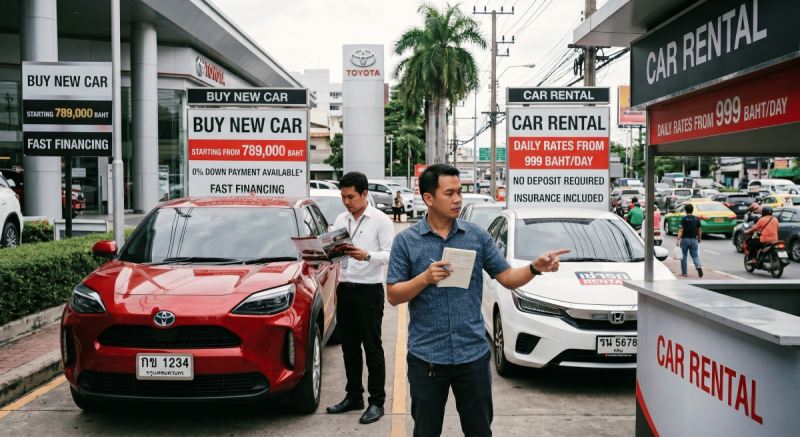
What makes more sense for expats and long-term residents?
For expats settling into the vibrant life of Pattaya, mobility is freedom. Whether you’re commuting from your condo to the golf course or taking a weekend trip to Bangkok, you’ll eventually face the big question: Should I buy a car or just rent one?
In 2026, the Thai automotive market has shifted significantly with the rise of EVs and flexible long-term leasing. Here is the breakdown to help you decide which path fits your lifestyle.
1. Buying a Car: The Long-Term Investment
If you plan to stay in Thailand for more than 2–3 years, buying is generally the most cost-effective route.
The Pros:
- Lower Monthly Cost: Over time, the "per month" cost of owning is significantly lower than renting.
- Asset Value: Cars in Thailand hold their resale value surprisingly well compared to Western markets.
- Freedom to Modify: You can tint the windows, upgrade the sound system, or add a roof rack without asking permission.
The Cons:
- Large Upfront Capital: Unless you qualify for financing (which can be tricky for new expats), you’ll likely need to pay in full.
- Maintenance & Insurance: You are responsible for the annual "Tabien" (tax), mandatory insurance (Por Ror Bor), and regular servicing.
- Depreciation: While resale value is decent, you still lose money the moment you drive off the lot.
2. Renting a Car: Ultimate Flexibility
Renting is no longer just for tourists. Many long-term residents now opt for "Long-Term Rental" or "Operating Leases."
The Pros:
- Zero Maintenance Hassle: If the battery dies or the AC stops working, the rental company replaces the car immediately unless it’s due to personal use. Cost will be upto you.
- Insurance Included: Premium "First Class" insurance is almost always included in the price but always double check with your agency.
- Try Before You Buy: Renting allows you to test different models (and the Pattaya traffic) before committing to a purchase.
- No Resale Stress: When you leave Thailand, you simply hand back the keys.
The Cons:
- Higher Monthly Outlay: You are paying for the convenience. A decent sedan starts around 15,000 – 20,000 THB per month ( Approx. $420-620 )
- "Dead Money": At the end of three years, you have zero equity in the vehicle.
3. The 2026 "EV Factor"
Thailand has become a regional hub for Electric Vehicles (EVs). If you are buying a home in a modern development—like many of the projects we represent at ROOF21—you likely have access to EV charging ports.
- Buying an EV: High upfront cost, but incredibly low "fuel" costs and government subsidies make this a smart 5-year play.
- Renting an EV: A great way to see if an electric car fits your lifestyle without worrying about battery degradation or charging infrastructure.
4. The Verdict: Which is for you?
Buy if... You have a Permanent Resident or Long-Term Visa (LTR/Retirement), plan to stay for 3+ years, and want the cheapest long-term transport. Having your own car also makes it easier to visit properties in outskirts like Huay Yai or Bang Saray.
Rent if... You are on a 1-year contract, prefer to keep your capital liquid for property investments, or simply don't want the headache of dealing with Thai garages and insurance paperwork.
Expert Tip from ROOF21
If you are buying property through us, we can often assist with the paperwork required for a car purchase, such as the Certificate of Residency. Many of our clients rent for the first three months to find their favorite "neighborhood" before buying a vehicle that suits their specific parking and commuting needs.
Looking for a home with a double garage or EV charging?
Explore our latest listings at www.roof21.co.th or visit us in Jomtien!


