


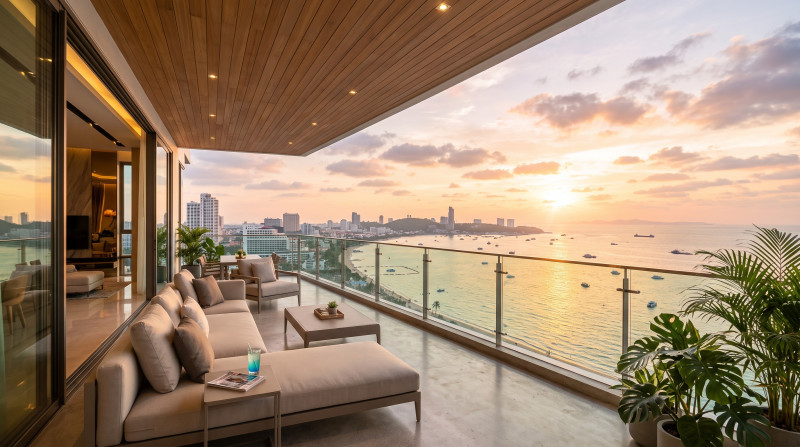
A step-by-step guide to foreign property ownership, legal frameworks, foreign quota rules, taxes, and safe real estate investment strategies in Pattaya.
Thailand remains one of the most attractive real estate investment destinations in Southeast Asia. Competitive pricing, strong rental yields, tens of millions of annual tourists, modern infrastructure, and an enviable lifestyle draw thousands of foreign buyers considering a condo, house, or luxury villa in paradise.
However, buying real estate in Thailand operates under very different legal frameworks than in Western countries. Thai law strictly defines what foreign nationals can and cannot own. Navigating these regulations without proper knowledge can lead to costly mistakes. For full legal context, see our detailed guide on Can a Foreigner Own a Property in Thailand? (2026 Update).
This step-by-step guide outlines the entire buying process — from initial property selection to final title deed transfer — drawing on over a decade of hands-on experience from our team at ROOF 21 in Pattaya.
1. What Can a Foreigner Own in Thailand?
Understanding property ownership laws is the vital first step for any foreign investor. Thai real estate law is clear on foreign ownership boundaries:
Condominiums: Direct Foreign Freehold Ownership
Foreigners can own a condo unit outright in their own name under Foreign Freehold ownership. You are registered as the 100% full owner on the official title deed (Chanote) at the government Land Office, with no local Thai partner required.
The Foreign Quota Rule: Under the Thai Condominium Act, a maximum of 49% of the total saleable floor area of a condominium building can be owned by non-Thai citizens. The remaining 51% must be owned by Thai nationals.
Example: In a building with 100 identical units, up to 49 units can be owned directly by foreign buyers under Foreign Freehold status, while 51 units must belong to Thai citizens or Thai entities.
ROOF 21 Tip: Before placing a deposit on a condo, always verify whether foreign quota space is available. Our agents at ROOF 21 verify foreign quota status as standard practice before any transaction.
Land and Houses: Land Code Restrictions
Under the Land Code Act, foreign individuals cannot own land in Thailand in their personal name. This restriction remains strictly enforced in 2026.
If you are interested in purchasing a house, townhouse, or luxury villa, there are two primary legal frameworks available:
Leasehold: You lease the land for an initial term of 30 years. The lease agreement is officially registered at the local Land Office, granting you exclusive rights to use and occupy the property.
Sap-Ing-Sith (Registered Real Property Right): A modern statutory right where property rights are registered directly against the title deed. This grants absolute legal control over the property for up to 30 years — including the right to transfer, sublease, mortgage, or inherit without requiring ongoing owner consent.
Warning: The Risk of "Nominee" Structures
In the past, some buyers used nominee companies — setting up a Thai company where Thai nationals held a nominal 51% share while the foreigner held effective control. This practice is illegal under Thai law. The Ministry of Commerce (DBD) actively uses data analytics to detect and prosecute fraudulent nominee structures. We strongly advise against using nominee setups.
2. Freehold vs. Leasehold vs. Sap-Ing-Sith – What’s the Difference?
| Ownership Structure | Ownership Type | Duration | Primary Use Case | Transferability & Inheritance |
|---|---|---|---|---|
| Freehold | Absolute Ownership | Permanent / Indefinite | Condominiums (within 49% Quota) | Fully transferrable, sellable, and inheritable. |
| Leasehold | Contractual Right | 30 Years (with contract options) | Landed Homes / Villas / Maxed Quota Condos | Requires landlord cooperation for renewal/transfer. |
| Sap-Ing-Sith | Statutory Real Right | Up to 30 Years | Landed Homes / Villas / Commercial Property | Transferrable, sellable, and inheritable by law. |
Freehold: Offers maximum legal security. Ownership is registered in your name at the Land Office, is perpetual, and can be easily sold, gifted, or passed on to heirs.
Leasehold: A 30-year registered lease. While developers often offer contractual guarantees for renewal (e.g., 30+30+30 years totaling 90 years), Thai law only guarantees the primary 30-year registered term. The Supreme Court of Thailand has reaffirmed that renewal options are contractual promises, not automatic statutory rights.
Sap-Ing-Sith: A legal alternative designed to provide leasehold properties with freehold-like security.
3. Why Sap-Ing-Sith is the Safest Choice for Landed Property
For investors seeking a standalone villa or house, Sap-Ing-Sith provides superior legal protection over standard contractual leases. For an in-depth comparative breakdown, read our article How to Safely Buy a House in Thailand: Sap-Ing-Sith vs. Standard Leasehold.
Landlord Independence: Unlike standard leaseholds, you do not need the landowner’s permission to sell, renovate, sublease, or transfer your rights.
Family Protection: Sap-Ing-Sith rights automatically form part of your legal estate, guaranteeing that your family inherits the rights seamlessly without landlord intervention.
Higher Resale Value: Because Sap-Ing-Sith offers stronger statutory security, properties registered under this system maintain higher market liquidity and value retention.
4. Step-by-Step Buying Process in Thailand
Buying real estate in Thailand is straightforward when guided by a structured legal process:
Step 1: Define Your Goal
Establish your objective — whether it is a vacation home, high-yield rental investment, or long-term residence. Specify your budget, target location, and preferred property style.
Step 2: Property Viewing
Inspect properties in person or arrange remote video walkthroughs with detailed documentation if you are overseas.
Step 3: Reservation Agreement & Deposit
Once a property is chosen, you sign a reservation agreement and pay a holding deposit — typically 50,000 to 200,000 THB (~€1,300 to €5,200). This removes the property from the market while sales contracts are prepared. Reservation fees are generally non-refundable.
Step 4: Sales and Purchase Agreement (SPA)
The contract defines all transactional terms: price, payment schedules, completion timelines, and tax allocations.
Step 5: Transferring Funds & Obtaining the FET Form (Crucial)
To register a condominium under Foreign Freehold, funds must be transferred into Thailand from an overseas bank account in foreign currency (e.g., EUR, USD, GBP).
Upon arrival, the receiving Thai bank issues a Foreign Exchange Transaction (FET) Form (or a credit advice certificate for amounts under $50,000 USD). Without an FET Form, the Land Office will not register Foreign Freehold title to a foreigner. Never pay in local Thai currency cash or via a domestic transfer from an existing Thai bank account if seeking Freehold status.
Step 6: Due Diligence
Before final payments, perform a title search to inspect the Chanote title deed, confirm clear title, check for mortgages or liens, and verify developer building permits.
Step 7: Title Transfer at the Land Office
On completion day, ownership is officially registered at the local Land Office. The buyer pays the remaining balance, and the title deed (Chanote) is updated with the buyer's name. If you cannot attend in person, the transfer can be completed on your behalf using a notarized Power of Attorney (POA).
5. Taxes and Closing Costs
Closing costs in Thailand are lower than in many Western markets. They are typically split between buyer and seller as negotiated:
| Fee / Tax Type | Rate / Calculation Base | Responsible Party |
|---|---|---|
| Transfer Fee | 2% of Land Office Assessed Value | Usually split 50/50 |
| Stamp Duty | 0.5% of Sale Price or Assessed Value | Seller (Exempt if SBT applies) |
| Specific Business Tax (SBT) | 3.3% (Applies if seller owned property < 5 years) | Seller |
| Withholding Tax (WHT) | 1% (Corporate seller) or Progressive rate (Individual) | Seller |
| Sinking Fund | ~500 – 700 THB / sq.m (One-off fee for new builds) | Buyer |
| Maintenance Fee | ~30 – 80 THB / sq.m / month | Buyer |
Note: Developers frequently run promotions offering to cover selected closing fees.
6. Buying New (Off-Plan) vs. Resale Properties
Developer / Off-Plan Properties
Pros: Brand-new construction, modern design, developer warranties, early-stage pricing discounts, and flexible staged payment schedules during construction.
Risks: Construction delays or developer completion risks.
Mitigation: Partner with established developers with a proven completion track record.
Resale Properties
Pros: Immediate physical inspection, established building management, instant occupancy, and immediate rental income generation.
Risks: Property wear and tear, potential hidden maintenance issues.
Mitigation: Conduct thorough due diligence and physical inspections.
7. The 5 Most Common Buyer Mistakes
To ensure a smooth purchase, learn more about Scams When Buying Property in Thailand: 5 Pitfalls & How to Avoid Them (2026).
Purchasing Without Independent Verification: Relying solely on seller representation without independent contract review.
Transferring Money Domestically: Paying from a local Thai bank account, rendering the transaction ineligible for Foreign Freehold registration due to a missing FET Form.
Ignoring Ongoing Holding Costs: Calculating ROI without accounting for common area fees, sinking funds, utilities, and property management expenses.
Failing to Verify Foreign Quota: Placing a non-refundable deposit on a condo unit without confirming available space in the 49% foreign quota.
Skipping Developer Due Diligence: Purchasing off-plan without evaluating the developer’s financial standing and past projects.
8. Why Choose Pattaya for Real Estate Investment?
Pattaya is a top-performing real estate market in Thailand due to key structural advantages. Learn more about Who is Buying Property in Thailand? Market Trends and Demographics.
Strategic Location: Located 150 km from Bangkok and Suvarnabhumi International Airport, with U-Tapao International Airport just 40 km away.
Infrastructure & Growth: Positioned at the heart of the Eastern Economic Corridor (EEC). Read our analysis on Pattaya 2026: From Resort Town to Global Safe Haven and Why Pattaya is Your Safe Haven: Low Risk of Tsunamis and Earthquakes.
High Yields & Retirement Demand: Offers strong rental returns. See why Forbes Names Thailand a Top Country to Retire and why Thailand is recognized as Asia’s #1 Retirement Paradise.
Lifestyle Amenities: Exceptional international healthcare, top international schools, world-class golf courses, and marina facilities.
9. Hands-Off Property Management
Managing real estate remotely is seamless with professional local support. Discover how we protect your asset in Beyond the Sale: Introducing the ROOF21 Property Management Services or visit our specialized management platform at Pattaya Property Care.
Tenant sourcing and screening
Lease agreement preparation and rent collection
Routine inspections, cleaning, and maintenance
Full English, Slovak, and Czech language support on the ground
10. Further Guides & Lifestyle Resources
Planning your move or investment in Thailand? Explore our expert guides on relocation, travel, and living in Thailand:
Retirement Planning: Retiring in Thailand in 2026: Cost Breakdown, Visas, and What to Expect
Alternative Rental Markets: Bangkok Rent by Neighbourhood: What Your Budget Gets in 2026
Healthcare & Insurance: Living in Thailand – Health Insurance Guide and Travel Insurance to Thailand: What to Look Out For
Connectivity & Travel Updates: Internet in Thailand: SIM vs eSIM Guide, LAX to Bangkok Flights Resume, and Urgent Traveler Alert: Thailand Digital Arrival Card (TDAC) Scam.
11. Key Takeaways Checklist
Condos can be owned 100% Freehold under your own name (up to the 49% foreign quota).
Foreigners cannot directly own land; use Leasehold or Sap-Ing-Sith for houses/villas.
Transfer funds from abroad in foreign currency to secure your FET Form.
Avoid illegal nominee company structures.
Always complete professional due diligence before signing contracts.
Ready to Invest in Pattaya Real Estate?
Contact ROOF 21 today for a complimentary consultation. Our multilingual team will guide you through every step of the purchase safely and transparently.
Disclaimer: This article is for informational purposes only and does not constitute formal legal or financial advice. For specific legal inquiries, we recommend consulting a qualified real estate attorney licensed in Thailand.


