


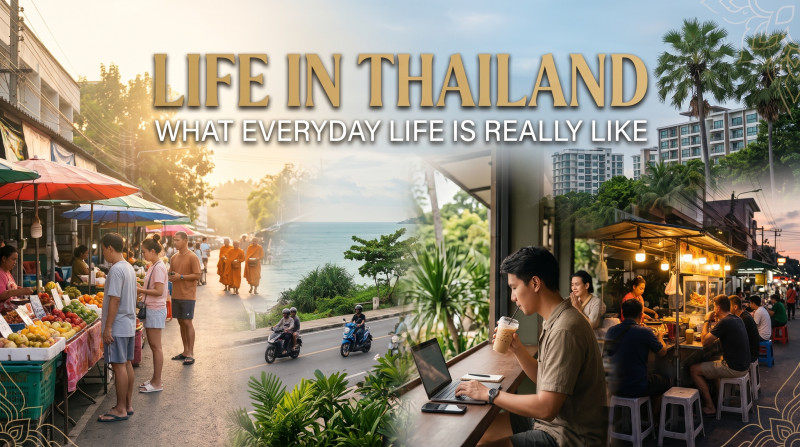
Vacationing in Thailand lounging on tropical beaches, taking speedboat tours, and hopping between street food stalls shows you one facet of the country. Living here full-time reveals a completely different, much richer reality. Whether you are considering relocating for retirement, remote work, or a lifestyle upgrade, understanding daily life beyond the holiday postcard is essential.
1. The Daily Rhythm: Embracing "Sabai Sabai"
The defining feature of daily existence in Thailand is its tempo. Life revolves around the cultural concept of Sabai Sabai an untranslatable ethos reflecting ease, balance, and unhurried contentment.
Beating the Heat
Because daytime temperatures average between 30°C and 35°C year-round, life naturally splits into two main pulses:
- The Early Morning (6:30 AM – 10:00 AM): The best hours for jogging, walking dogs, grocery shopping, or hitting open-air markets before the midday sun peaks.
- The Midday Lull (11:00 AM – 3:30 PM): Life shifts indoors. Modern shopping malls, air-conditioned co-working spaces, and cafes become community hubs for meetings and dining.
- The Evening Revival (5:00 PM onward): As dusk falls, coastal promenades, night bazaars, and outdoor restaurants fill with energy.
Life does not move at the rigid, high-friction pace of Western capitals. Bureaucracy, deliveries, and repair work run on local time. Learning to trade urgency for patience is the single most important adjustment every newcomer makes.
2. Culture & Society: Warmth, Respect, and Community
Thai culture is deeply relational, Buddhist-influenced, and anchored in harmony.
- The Smile as Social Lubricant: The famous "Land of Smiles" is not a marketing cliché; it is a cultural framework. Direct confrontation, shouting, or aggressive displays of frustration (jai ron, hot-heartedness) are counterproductive in Thailand. Approaching challenges with a smile and calm tone (jai yen, cool-heartedness) consistently delivers better results.
- Everyday Etiquette: Simple gestures go a long way. Returning a polite Wai (the traditional greeting with palms together), removing your shoes before stepping into a home, shop, or clinic, and dressing modestly when visiting temples or administrative offices quickly earn local respect.
- Safety & Welcoming Atmosphere: Violent street crime is exceptionally rare compared to European or North American cities. Walking home late at night whether in residential Pattaya, Bangkok, or Chiang Mai feels secure for solo travelers, families, and seniors alike.
3. Work & Professional Life
Living in Thailand does not mean checking out of career ambitions. The country has evolved into Southeast Asia’s premier hub for digital entrepreneurs, regional executives, and retirees.
Remote Work and Digital Nomads
High-speed fiber optic internet is standard even in budget apartments, and 5G mobile coverage often outperforms Western Europe. The introduction of long-term options such as the Destination Thailand Visa (DTV) for digital nomads and freelancers, and the Long-Term Resident (LTR) visa for high-earning professionals and retirees has made legally residing and working here significantly simpler.
4. Food & Leisure: World-Class Living at Every Budget
Everyday leisure in Thailand centers on food, wellness, and outdoor recreation.
| Everyday Living Spectrum | |
| Budget Local Dining | 60–100 THB ($1.70–$2.80) |
| Modern Beachfront Cafe | 120–250 THB ($3.50–$7.00) |
| High-End / Western Meal | 400–1,200+ THB ($11–$35+) |
| Traditional Thai Massage | 250–400 THB/hr ($7–$12) |
- Kitchen-Free Culture: Many condominiums feature compact kitchens because eating out or grabbing takeaway is often cheaper, faster, and fresher than cooking at home. Every neighborhood has neighborhood fruit vendors, noodle shops, and Khao Gaeng (curry-over-rice) stalls.
- Wellness as a Habit: Weekly 60-minute traditional Thai massages, world-class golf courses, muay thai training, and yachting are accessible parts of an ordinary weekly routine rather than rare splurges.
- Weekend Escapes: High-speed road networks, low-cost domestic flights, and coastal ferry routes make island hopping, rainforest trekking, or weekend beach trips effortlessly accessible.
Check out some of our favourite dining spots!
1. Pattaya's Hidden Gems: Local Spots & Authentic Flavors
2. Pattaya Fine Dining & Rooftop Experiences
3. The Best Beachfront Dining in Pattaya
4. A global tour through Pattaya
5. Housing: Comfort, Amenities, and Practical Choices
Housing in Thailand offers exceptional value for money. Expats and long-term residents typically choose between high-rise condominium complexes and detached pool villas.
Property Type | Typical Amenities | Ownership Legalities |
Modern Condominium | Infinity pool, gym, sauna, 24/7 security, coworking lounge | Foreigners can own 100% freehold under the Foreign Quota (up to 49% of project area). |
Gated Pool Villa | Private garden, pool, parking, quiet suburban setting | Foreigners can own the physical building freehold; land is typically secured via long-term registered leasehold (30+ years) |
What Housing Delivers
Modern developments prioritize resort-style amenities:
- Turnkey Living: Units are predominantly sold or rented fully furnished, complete with built-in cabinetry, appliances, and air conditioning.
- On-Site Management: Juristic offices handle package deliveries, building security, common area cleaning, and maintenance oversight.
- Property Care: For owners who split their time between Europe and Thailand, professional property management agencies like Pattaya Property Care handle bill payments, utility setups, tenant vetting, and regular inspections to maintain the property while away.
6. Practical Realities: Healthcare, Transport, and Costs
Healthcare
Thailand boasts some of the finest medical care globally. Private facilities (such as Bangkok Hospital) rival top Western institutions, with English-speaking staff, zero wait times, and direct-billing partnerships with international health insurers. Routine dental, eye-care, and specialist consultations cost a fraction of European or US private care.
Getting Around
- Day-to-day transit: Ride-hailing apps like Grab and Bolt make urban transit cheap and frictionless.
- Motorbikes vs. Cars: Motorbike scooters are the fastest way through coastal and island traffic, though defensive driving is non-negotiable. For family life or frequent inter-city travel, purchasing or leasing a car provides safety and comfort.
Cost of Living Overview
A comfortable lifestyle including a modern 1-bedroom sea-view condo, dining out daily, regular fitness activities, and health insurance often costs between 40,000 to 75,000 THB per month ($1,100 to $2,100 USD), depending on lifestyle and location.
Settling Into Your New Life
Living in Thailand offers a genuine balance between modern Western conveniences and a relaxed tropical pace. The transition succeeds when you match a flexible mindset with reliable local partners for housing, legalities, and daily property management.
Whether you are looking to rent your first beachside condo, purchase a winter residence, or secure an investment property, having grounded, on-the-ground support ensures your move is seamless.


